
Top 4 Myths About Basal Cell Carcinoma
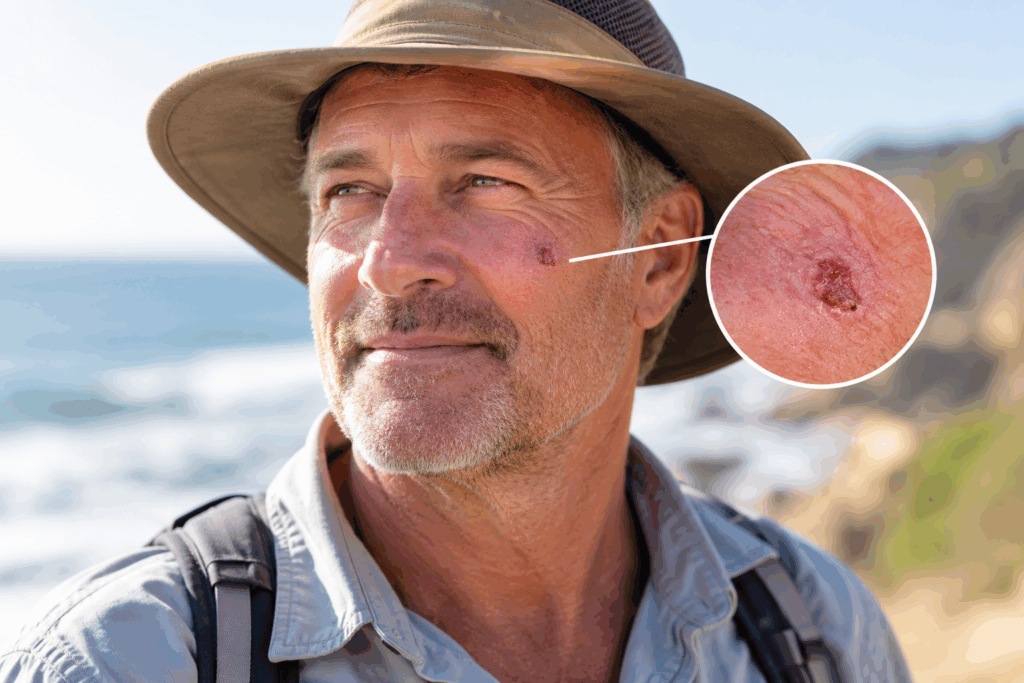
The most common type of skin cancer is Basal cell carcinoma (BCC), and it affects around 4 million people a year. When a skin cancer screening reveals something, most patients hope to hear “basal cell” instead of squamous cell carcinoma or melanoma, since BCC tends to grow slowly and rarely spreads. But that reputation as the “easy” skin cancer is exactly why so many myths surround it. If you have a spot on your skin you’ve been meaning to ignore, here’s what you should know first.
What Does Basal Cell Carcinoma Look Like?
BCC doesn’t always look like a typical mole, which is part of why people miss it. Common warning signs include:
- A shiny, pearly or translucent bump
- A pink or red patch that may be scaly or itchy
- A sore that bleeds, scabs over, heals and then comes back
- A flat, waxy area that looks like a scar
- A growth with a raised border and a dip in the center
If something on your skin won’t go away, it’s worth having a dermatologist take a look.
Myth #1: It Is OK to Ignore Basal Cell Carcinoma
BCC grows slowly, but it does not go away on its own. Left untreated, it keeps growing deeper into the skin and can destroy surrounding tissue, nerves, and even bone. This can lead to open sores, infections, and disfigurement. Especially on the face, nose and ears where most BCCs show up.
While BCC rarely spreads to other organs, it can become invasive and in some cases reach the lymph nodes. The good news is that early treatment works. Mohs surgery, a precise technique that removes cancer layer by layer, has cure rates of up to 99% for BCCs treated for the first time.
A thorough skin cancer screening is a head-to-toe exam that includes your scalp, nails, and the areas most people can’t see in the mirror or feel with their hands.
Myth #2: Basal Cell Carcinoma Only Shows Up on Sun-Exposed Skin
This myth comes from the fact that most BCCs do appear on sun-exposed areas like the face, neck, scalp, shoulders and back. UV exposure is the leading cause. But BCC can also develop on skin that rarely sees the sun, so any new growth, changing spot or sore that doesn’t heal deserves a closer look no matter where it is.
Indoor tanning is another major culprit, linked to roughly 245,000 basal cell carcinomas in the U.S. each year.
Although using sunscreen doesn’t mean you won’t get cancer, forming some good skincare habits goes a long way. Apply sunscreen daily, wear protective clothing, including hats and sunglasses, and avoid tanning beds! Don’t make the mistake of thinking cooler weather means skipping sunscreen. Snow can reflect up to 80% of the sun’s UV rays, so you get hit twice, once from above and once from below.
Many insurance plans cover skin cancer screenings, especially if you have a spot of concern or a history of skin cancer. Check with your carrier to see what your plan includes.
Myth #3: Basal Cell Carcinoma Will Not Come Back After Treatment
Many people believe once a BCC is removed, they’re done. The reality is if you’ve had BCC once, you are more likely to have it again. There are two ways this happens. The original cancer can recur in the same spot, which is uncommon after Mohs surgery. More often, a brand-new BCC develops elsewhere, since the skin has already been damaged by years of sun exposure. Research shows 30 to 50% of people diagnosed with BCC will develop another nonmelanoma skin cancer within five years.
Factors like a family history of skin cancer, a previous BCC diagnosis, a weakened immune system, and other skin conditions can all raise your risk. Anyone with a history of basal cell or squamous cell carcinoma should be seen regularly; your dermatologist may recommend checkups every few months at first and then once a year.
Myth #4: Only Older, Fair-Skinned People Get Basal Cell Carcinoma
It’s true that risk goes up with age because sun damage adds up over time, and people with fair skin, light eyes, and light hair are at higher risk. But BCC is showing up more and more in patients in their 20s and 30s. Men are also more likely than women to develop it, likely because they spend more time in the sun.
People with darker skin tones can develop BCC too, and it may look different, sometimes appearing brown or darker. Nobody is immune because cancer can come from a genetic disposition, but also environmental factors that we may or may not be aware of.
Although Basal cell carcinoma is highly treatable, catching and treating it early is imperative. Any new spots or a sore that won’t heal should be examined by a licensed dermatologist. Remember, moles are skin’s way of saying something, and ignoring anything concerning about how your skin is reacting is worth getting checked out.
If you live in the Atlanta area, contact Dr. Sherrie Straughn at Buckhead Dermatology today and don’t wait.