
New Vitiligo Treatments Offer Hope
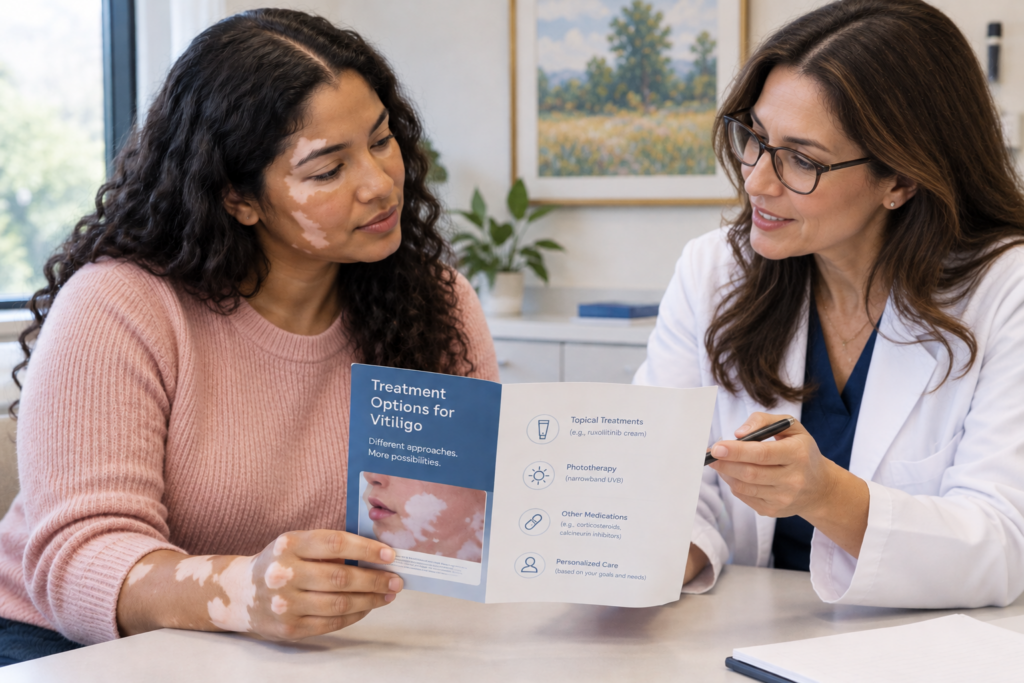
For a long time, treating vitiligo meant steroid creams, light therapy, and a lot of patience, with results that were hit or miss. That has started to change. In the last few years, researchers have learned much more about why vitiligo occurs. That understanding has led to the first treatment ever approved by the FDA specifically to bring color back to the skin, with more options working their way through clinical trials.
Why Vitiligo Was Hard to Treat
Vitiligo was difficult to treat because it is an autoimmune disease. The immune system mistakenly attacks the cells that produce pigment. As a result, patches of skin turn lighter or completely white. It affects people of every skin tone, but the contrast tends to be much more visible on darker skin, which can make its emotional impact heavier, too.
The older treatments mostly worked by calming the immune system in general. Topical steroids and calcineurin inhibitors could help, and narrowband UVB light therapy helped many patients, but none of them were designed around how vitiligo actually works. Researchers eventually traced a big part of the problem to a signaling route in the immune system called the JAK-STAT pathway. Block that signal, and the attack on pigment cells slows down. That discovery is what opened the door to a new class of treatments.
Topical Ruxolitinib
In July 2022, the FDA approved ruxolitinib cream 1.5% (sold as Opzelura) for nonsegmental vitiligo, the most common form, in patients 12 and older. It was the first medication ever approved specifically to help restore pigment in vitiligo. Ruxolitinib is a JAK inhibitor, so it goes right at that immune signaling pathway, and because it’s a cream, it works where it’s applied.
A couple of things worth knowing about this treatment are that it must be applied twice a day to affected areas covering up to 10% of the body. Results are slow, and the FDA notes it can take more than 24 weeks to see a satisfying response, so patience is required. The facial area tends to respond better than the hands and feet, which has been true of most vitiligo treatments. Common side effects in the trials included acne where the cream was applied and itching. Any JAK inhibitor will have side effects and should be discussed with a licensed dermatologist.
Oral JAK Inhibitors Are Close Behind
A cream makes sense when vitiligo covers a small area. It gets a lot less practical when patches are widespread or still spreading. That’s where oral medications, which work throughout the whole body, could fill a real gap, and 2026 has been a big year for them.
There are 3 oral JAK inhibitors in various stages of development, with one already approved for the treatment of alopecia areata. Upadacitinib (Rinvoq), Ritlecitinib (Litfulo), and Povorcitinib are not miracle pills. Most people in the trials didn’t reach the top response levels within the first year, and oral JAK inhibitors require screening and ongoing monitoring due to known risks. But having three different oral drugs succeed in late-stage trials is a strong sign the approach works.
Skilled vitiligo dermatologists are aware of new treatments and their development stages and can help patients determine whether oral treatments are the best option. Seeing visible results will still require patience bacsue treatments take time. Still, an oral option may provide a more thorough approach to different and larger areas of the skin that are difficult to treat topically.
If You Have Vitiligo
The biggest shift is that vitiligo is finally being treated as a real immune condition, not just a cosmetic issue. Older tools haven’t gone away either. Light therapy is now being studied alongside JAK inhibitors, and for stable patches that haven’t changed in a while, procedures that transplant pigment cells from one area of skin to another are still an option.
No single treatment works for everyone, and repigmentation still takes months, not weeks. A professional dermatologist can assess how active your vitiligo is, where it is, and how much area it covers, and help determine which of these options actually fits. Dr. Sherrie Straughn is exceptional in her field and has helped many patients navigate life with vitiligo. Contact her offices today for an appointment.