When Eczema Shows Up In Adults
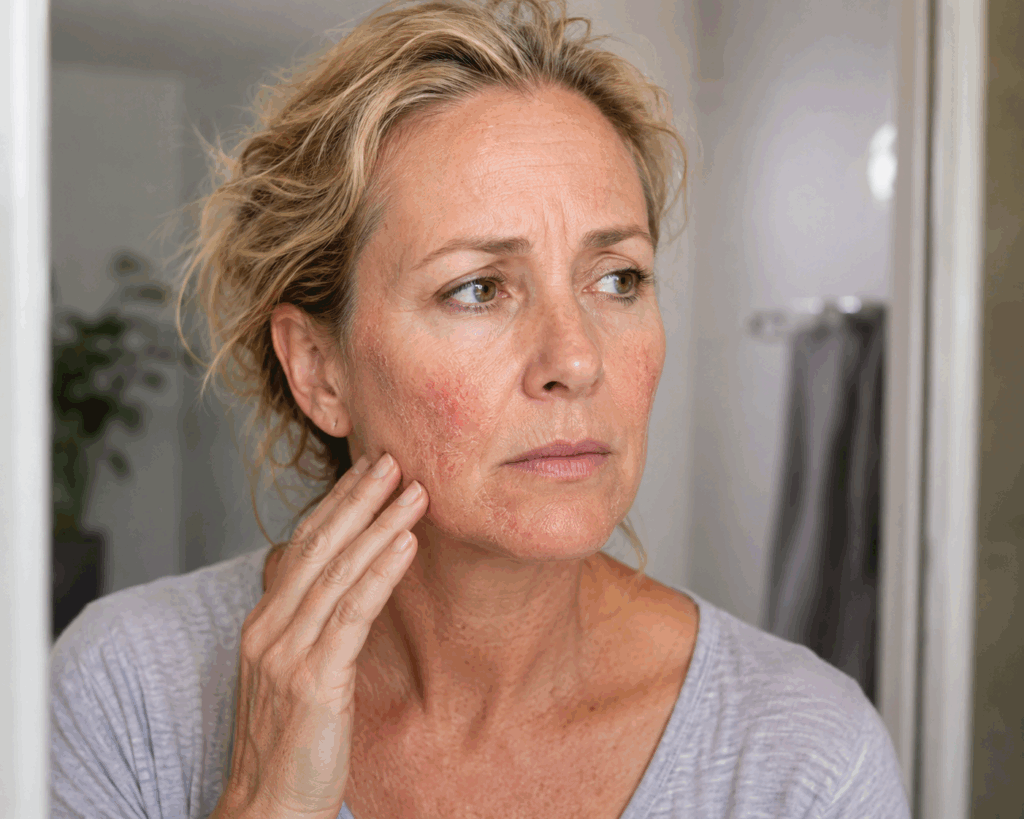
Most people think of eczema as something that starts in childhood and, with any luck, fades away by the teenage years. So when a rash, dry patches, or persistent itching show up for the first time at 35, 50, or even 65, it can be genuinely confusing. Is it an allergy? A reaction to a new detergent? Something worse?
For a real portion of the population, the answer turns out to be eczema itself, just arriving on a different timeline. Research suggests that roughly one in four adults with atopic dermatitis, the most common form of eczema, report that it began after age 18. There is even a recognized peak for new diagnoses in a person’s 50s. Eczema dermatologists sometimes call this adult-onset atopic dermatitis, and it behaves a little differently from the childhood version.
What Causes Eczema to Appear Later
Childhood eczema is often tied to a genetic variation affecting filaggrin, a protein that helps hold the outer layer of skin together and keep moisture in. People with a less functional version of this protein tend to have a weaker skin barrier from birth, which is part of why eczema shows up so early for so many kids.
Adults who develop eczema later in life may carry a similar genetic tendency, but it was not triggered until something in their environment or their body changed enough to expose it. A few factors that dermatologists point to include:
Aging skin. Skin naturally produces less oil and loses lipids as we get older, thinning the barrier that normally keeps irritants out and moisture in.
Hormonal shifts. Declining estrogen, particularly around perimenopause and menopause, can affect how well the skin barrier holds up under stress.
A weakened or shifting immune response. The immune system does not remain static throughout life, and changes in its response to everyday triggers can lower the threshold for inflammation.
Environmental exposure. A move to a drier climate, more time in heated or air-conditioned spaces, new occupational exposures, or years of cumulative contact with irritants and allergens can eventually overwhelm a barrier that held up fine for decades.
Underlying conditions. Some research has linked adult-onset eczema to obesity, high blood pressure, and prediabetes, and separately to food allergies developed later in life.
It is also worth noting that some adults had mild eczema as children that was never diagnosed, or that faded and is only now resurfacing in a different form. A dermatologist reviewing your history is often the only way to sort out which category applies.
When Eczema Diagnosis in Adulthood Seems Sudden
Adults who visit a dermatologist may be surprised when they get an eczema diagnosis, especially if they have never been diagnosed before. Many adults are confused because it doesn’t look the same later in life, and rarely looks like the images we come to accept as signs of eczema. The signs differ from person to person, and the patterns of being behind the knees or inside the elbows common in kids, adults often see it concentrated on the hands, neck, or face, or in scattered, circular-shaped patterns of nummular eczema. Because the presentation is less textbook, dermatologists usually need to rule out other conditions first, including allergic contact dermatitis, psoriasis, scabies, and in rarer cases certain skin lymphomas. A physical exam, done in the office, as well as patch testing, can help identify allergies and triggers to the symptoms. In some cases This is typically done through a combination of a physical exam, patch testing to check for contact allergies, and occasionally a skin biopsy.
Treatment Options
The good news is that eczema diagnosed later in life typically responds to the same categories of treatment used for eczema at any age, adjusted to the individual case.
- Topical corticosteroids reduce inflammation during flares and remain the first-line treatment for many patients.
- Moisturizers and emollients, used consistently rather than only during flares, help rebuild and maintain the skin barrier.
- Topical calcineurin inhibitors offer a steroid-free option for sensitive areas like the face and neck.
- Newer biologic and oral systemic therapies are increasingly used for moderate or severe cases. When eczema reaches a certain point, topical creams may be less effective.
- Trigger identification, often through patch testing, can help patients avoid the specific irritants or allergens setting off their flares.
Often, lifestyle and environment can contribute to adult-onset eczema. Most adults take similar steps, going back to what they remember about skincare. Taking shorter, warm showers, using “clean” and perfume-free products, and moisturizing immediately after bathing all support the skin barrier day to day. Adults may choose to take some time to reflect and make small changes to see if their condition improves, but when it doesn’t, they often end up in the dermatologist’s office where they can receive the help they need.
When diagnosed with adult eczema, or when experiencing new signs of a skin condition, follow the basics for caring for your skin. Only a professional dermatologist can accurately diagnose skin conditions and provide targeted treatments and FDA-approved products. A licensed dermatologist can confirm the diagnosis, rule out other causes, and build a treatment plan suited to how your skin is behaving now, not how it behaved decades ago.
Contact Buckhead Dermatology for an appointment to address any recent skin concerns and get the help you seek!