Blue Light Therapy Treatment
If you’ve had a facial recently, your dermatologist may have suggested “blue light therapy.” Blue light therapy is known to reduce inflammation and help with acne. Although the concept may not be new, it is surprising how many people skip it, and understanding its benefits can help individuals decide whether they want it done.
What Is Blue Light Therapy?
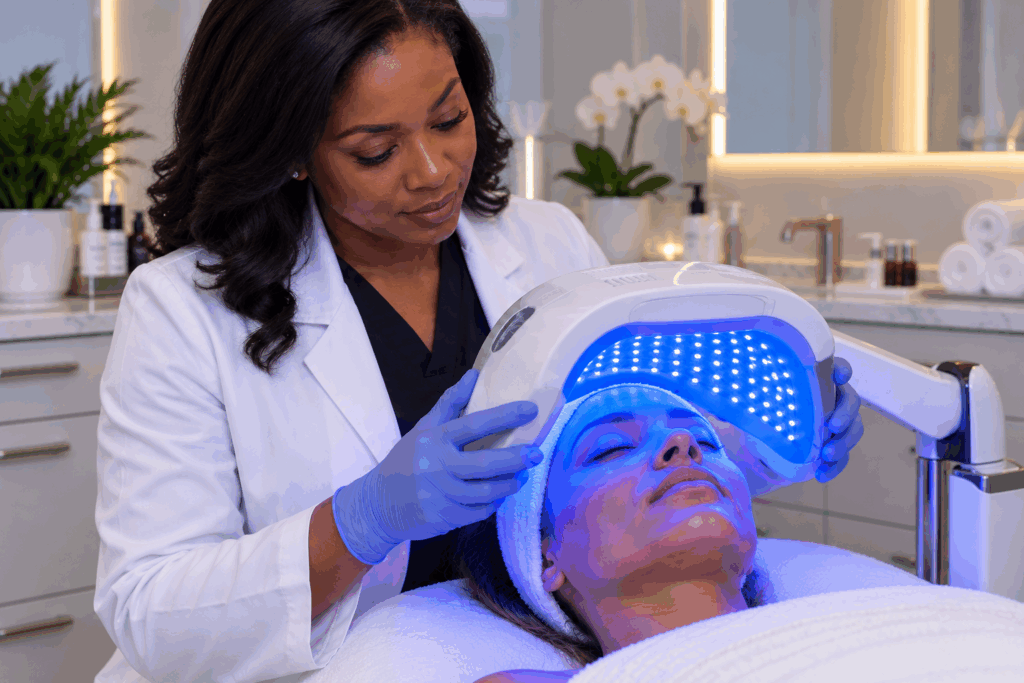
Blue light therapy is a light-based treatment that uses a specific wavelength of light directed at the skin. The wavelength is in the 405-420 nanometer range and is non-invasive. Blur light therapy does not involve injections or incisions, and it is painless. The wavelength does emit warmth, which is what most clients do experience but don’t feel discomfort from. In a dermatology setting, it’s typically administered using a specialized lamp or panel that the patient sits or lies under for a set period, usually 15-30 minutes.
Plain blue light therapy and PDT are sometimes confused, but they are not the same. Photodynamic therapy (PDT) involves applying a photosensitizing solution to the skin before light exposure. The solution makes the skin more reactive to light, intensifying the treatment, which is why it is important to have the treatment done by a professional. The main difference is that PDT may have more downtime.
What Blue Light Therapy Does Best
Blue light therapy is a non-invasive treatment that attacks and targets bacteria that cause acne. The in-office procedure addresses bacteria trapped in clogged, oily pores. The light is absorbed by compounds inside the bacteria, triggering a reaction that damages and reduces the bacterial population. Fewer bacteria generally mean less inflammation, which is why blue light is often used as an acne treatment.
It is important to understand that blue light doesn’t address all acne before committing to an appointment with false expectations. Asking for a consult is always acceptable to find out if your concerns can be addressed with this treatment.
Blue Light Pairings
Light therapy won’t shrink oil glands or unclog pores on its own, which is why it may be recommended to pair it with other treatments. Topical retinoids or extractions are used in combination to achieve greater results than light therapy alone. Some offices also pair blue light with red light in the same session, since red light works on inflammation and healing in a different way. If your acne has more to do with hormones or oil production than bacteria, blue light alone probably won’t get you all the way there.
How Blue Light Therapy is Administered
Most treatment plans require more than one session, although some clients see visible results from just one! Those suffering from chronic acne may seek regular treatments weekly and then taper off. Many of these decisions are based on the client’s preferences and the severity of the acne. This isn’t a treatment where you walk in with a breakout and walk out clear, but some clients are quite happy with the first treatments, and they continue to come in for more. Improvement tends to build gradually, and many patients notice less swelling and redness in existing breakouts before they notice fewer new ones forming.
Timing Blue Light Therapy Treatments
One of the most common things dermatologists get asked about light therapy is how far in advance to seek treatment before a big event. The timing of when to seek treatment does matter, and nobody wants to do anything too close to an event that it ends up backfiring. However, because blue light therapy is low downtime, some clinics market it as safe to do right before an occasion. In practice, that’s not quite the full picture.
The treatment may cause mild redness immediately afterward, but it will fade within a few hours. In some cases, the redness may take longer to fade, but the average person finds it goes away even when treatments are done the day before their event. Blue light therapy is cumulative, so it is better to start a month out from the event so multiple sessions can be done, yielding ideal results! A rushed first session could cause a bit of temporary irritation, with little payoff. It is like getting a bikini wax right before a tropical vacation – skin needs time to recover from any treatment.
Individuals considering blue light therapy for a specific skin concern should plan to visit a dermatologist several weeks before their event. Sitting through multiple sessions allows the skin to respond and for people to determine their timeline leading up to the event and whether the therapy is delivering the results they want. When combining it with PDT, don’t schedule it so close to an event, as recovery can take longer due to the treatment’s higher intensity. Sometimes, this combination can create flaky skin that needs to naturally exfoliate.
Before You Sign Up
A handful of things are worth asking your dermatologist before starting blue light therapy. First, ask how many sessions are typically recommended for someone with your skin concern. Second, find out whether they recommend plain blue light or blue light combined with a photosensitizing agent, as the downtime differs. Third, ask about side effects, even if they’re mild, such as temporary redness or dryness. Fourth, ask if any medications you are currently taking could affect the results. Lastly, ask about cost! Find a dermatology office that offers affordable treatments so you can continue to get the best results. Some may offer packages that can be a money saver.
Although blue light therapy isn’t a miracle fix, it is an incredible tool for addressing skin concerns, especially acne. Realistic expectations and a thoughtful timeline can get visible results for those seeking to look and feel their best.
Contact Buckhead Dermatology for more information about the light therapies they offer!