
Insight Into Melasma
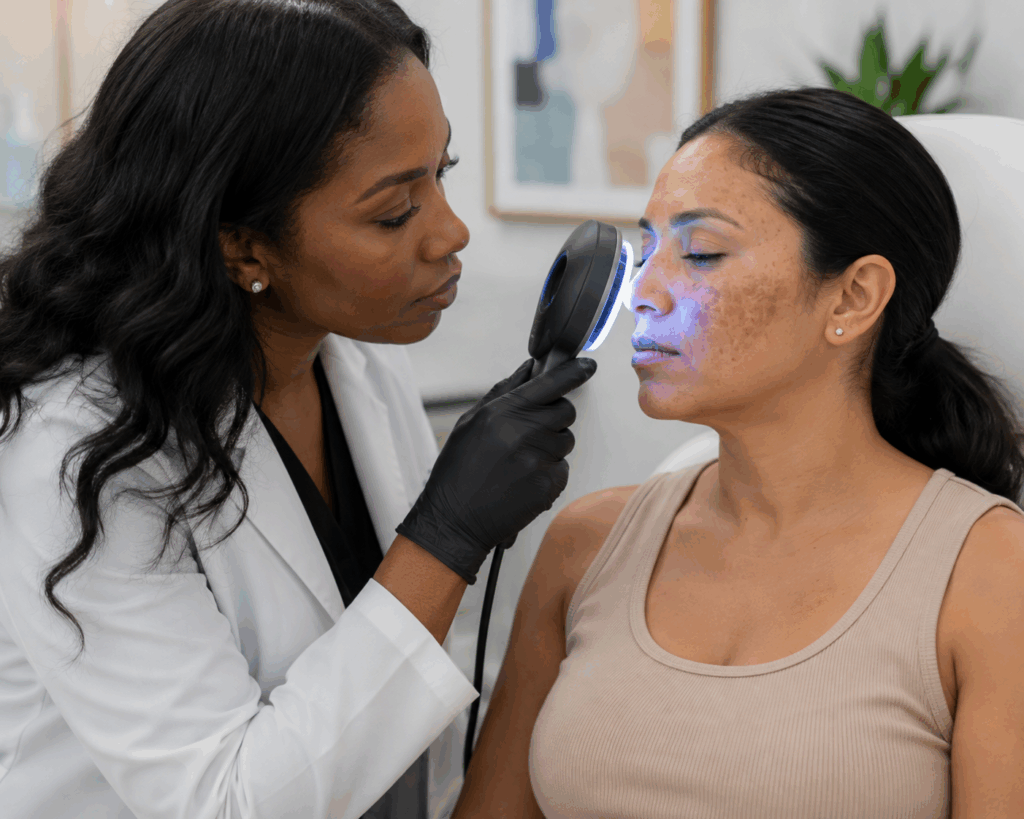
Gaining insight into melasma, its causes, and treatments can be a relief for those suffering from the skin condition. Melasma appears in brown or gray patches on the cheeks, forehead, and upper lip. Anyone who has seen these patches grow larger and darker isn’t imagining things, because this change in pigmentation is a real skin condition that can make individuals self-conscious. Melasma affects millions of people, though it doesn’t get the attention of its fellow skin conditions like acne and eczema. Although very common, it can take an emotional toll on those who find it difficult to hide the discolorations and feel insecure about their appearance. The prevalence of discoloration in the most visible areas of the body makes it something many people try over-the-counter solutions to lighten. Still, more effective and professional treatments are available.
Breaking Down Melasma
Melasma is a chronic pigmentation disorder in which certain skin cells called melanocytes go into overdrive and produce too much melanin. It is the pigment that gives your skin its color, but instead of an even tone, you end up with symmetrical patches. These patches may appear on both cheeks, across the forehead, on the nose, or above the lip. Some people also get it on the forearms. Melasma is not the same as age spots, but both are caused by overproduction of melanin.
The patches, which may appear light or dark, can indicate where the pigment is located on the skin, helping provide an accurate diagnosis and treatment plan. There are three types of melasma, and they are:
Epidermal melasma sits in the top layer of skin. It tends to look darker brown with more defined borders, and it usually responds best to topical treatments.
Dermal melasma goes deeper into the dermis. This type often looks more blue-gray and is harder to treat because the pigment isn’t sitting where topical creams can easily reach it.
Mixed melasma is the most common type and is a combination of epidermal and dermal melasma. The features are only revealed under close examination. A blanket approach to treatment will show improvement in some areas and not in others because of the combination, which can be frustrating for anyone trying to minimize the signs of melasma.
Dermatologists will use a Wood’s lamp to examine melasma spots more closely. The Wood’s lamp uses a special UV light that clearly shows different pigment depths. This matters in real life because it directly shapes what treatment plan makes sense. If signs aren’t improving with a cream that works well for someone else, it’s not because the cream failed, but more likely because the pigment is located in a different layer of skin.
What Causes Melasma
Melasma doesn’t have one single cause, it’s more like a perfect storm of a few things happening together.
Sun exposure is the biggest known trigger. UV light stimulates melanocytes directly, which is why pigmentation often worsens in summer and calms down a bit in winter. This is also why sunscreen isn’t optional if you’re managing this condition, it’s genuinely the foundation of any treatment plan.
As mentioned above, changes in hormones are a significant cause, which is why more women face melasma than men. Women often experience the condition, but sometimes it is temporary and will go away on its own once hormones are regulated. However, sometimes it requires professional treatments and products to get results. When hormones fluctuate, individuals often report a worsening of their condition. Some have called it “pregnancy mask,” even though other hormonal shifts can also cause visible signs. Estrogen and progesterone affect melanocyte activity, and for many women, melasma appears during pregnancy and then fades somewhat after delivery, though it can return with subsequent pregnancies or hormonal changes.
Genetics matter as well. If melasma runs in your family, you’re more likely to develop it yourself.
Who’s Most Affected
Women make up the vast majority of cases, somewhere around 90 percent, and it’s most common during the reproductive years. People with medium to darker skin tones, generally referred to as Fitzpatrick skin types III through VI, are at higher risk because their skin naturally has more active melanocytes. This includes many people of Hispanic, Asian, Middle Eastern, and African descent. However, melasma can and does show up in lighter skin too, particularly when hormones or sun exposure are strong triggers.
Treatment Options
There’s no single cure for melasma, but there’s plenty you can do to fade it and keep it from getting worse.
Daily broad-spectrum sunscreen is step one, no matter what else is added to the plan. Beyond that, dermatologists often reach for hydroquinone, which has been the gold-standard lightening treatment for decades, along with retinoids, azelaic acid, and tranexamic acid, either topically or taken orally. Chemical peels and certain laser or microneedling treatments can help too, especially for melasma that hasn’t responded well to creams alone.
Melasma can be a stubborn skin condition, and treatment is more about long-term management rather than a quick fix. Bleaching creams and other products that promise results may or may not work, so when you find you need help treating melasma, work with a professional dermatologist. Identifying the type of melasma helps tailor a plan to target individual concerns and help individuals feel good about how they look.
Contact Buckhead Dermatology today for a melasma consultation.